

The Ghost in the Machine: How the 1964 World’s Fair is Still Hiding in Tomorrowland
When Disney nerds talk about the 1964-1965 New York World’s Fair, the conversation usually goes straight to the "Big Four":
Great Moments with Mr. Lincoln,
and the Magic Skyway.
We know these attractions were the blueprints for the Disney we love today. But what if I told you that the Fair didn’t just give us a few rides? What if I told you that 60 years later, the physical DNA, the literal metal, magnets, and models of that legendary exposition is still hiding in plain sight at the Magic Kingdom? Today, we’re looking past the obvious and finding the "ghosts" of the World’s Fair still operating in Tomorrowland.
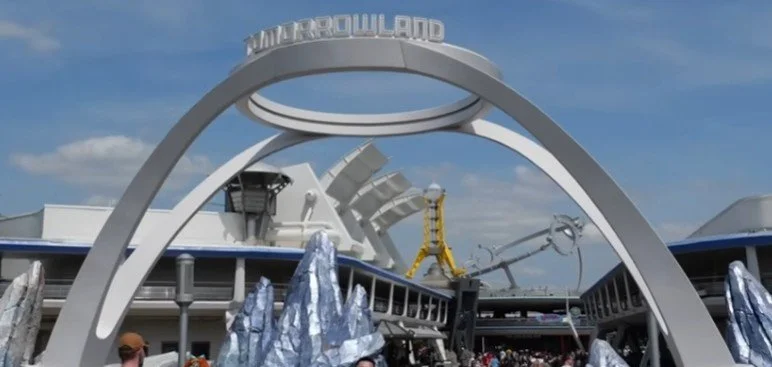
The Sliced City: The Progress City Model
As you glide through the Tomorrowland Transit Authority PeopleMover, you pass a massive, glowing diorama of a futuristic metropolis. For many, it’s just a cool backdrop. But for the Imagineering historian, it’s a survivor.
This is a significant portion of the original Progress City model. In 1964, this model was the grand finale of the Carousel of Progress at the Fair. Back the scale was 1/8” = 1 ‘. The miniature city included over 4,500 buildings and roughly 20,000 trees and shrubs, featuring moving cars, working elevators, and a vision for Walt’s original EPCOT. When the show moved to Florida, the model was too massive for the new theater, so it was "sliced" into pieces. What you see today is the heart of that original 1964 masterpiece.
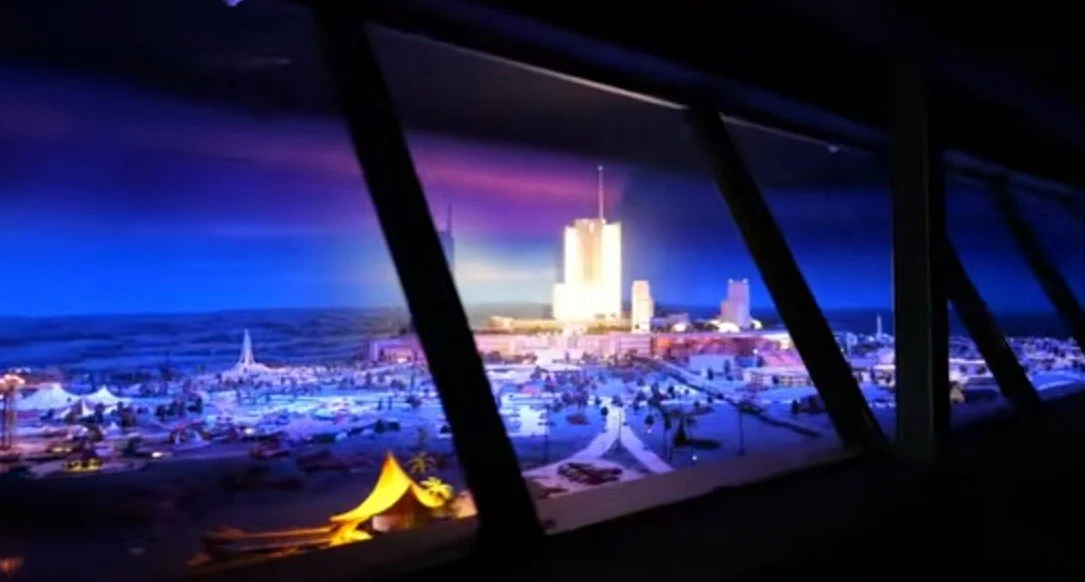
The heart of Walt’s vision: A piece of the original 1964 Progress City model.
Magnets in the Track: The Linear Induction Revolution
The PeopleMover itself is a direct descendant of the Ford Magic Skyway from the Fair. But while the Fair version used spinning tires to push cars along, Tomorrowland became a testing ground for something much more advanced: Linear Induction Motors (LIMs).
Tomorrowland was the first large-scale application of this "frictionless" magnetic technology. Those flat metal plates you see in the middle of the track are the "ghosts" of 1960s transit theory put into practice. It’s the same tech that now launches coasters like Rock 'n' Roller Coaster, but it started here as a way to create the "silent" city transit Walt dreamed of.
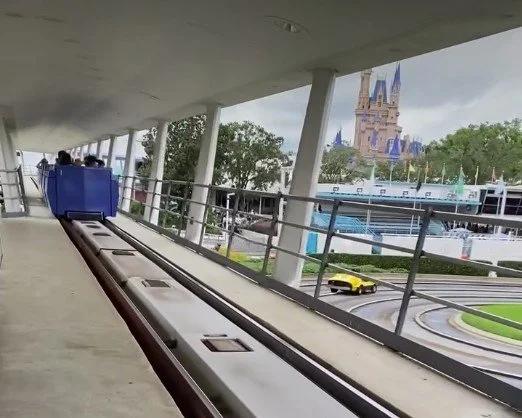
The LIM plates that make the TTA a "frictionless" wonder. The square plates in front of the train.
The Power Palms: Industrial Art
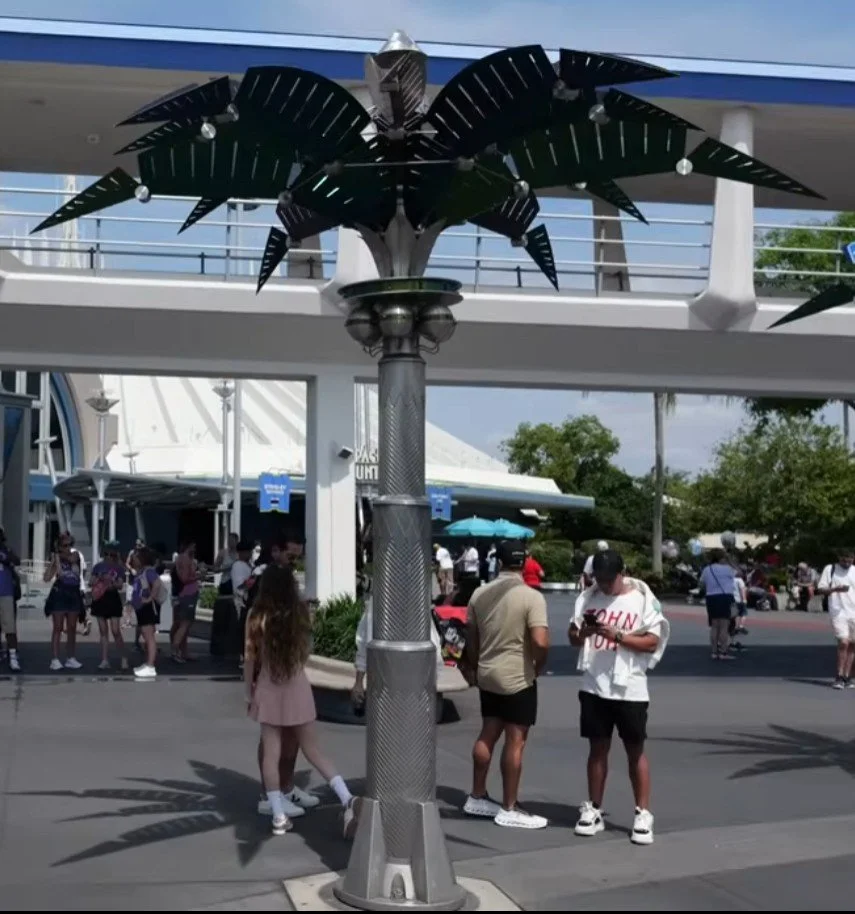
Look up near the area in front of Space Mountain. You’ll see giant, metallic trees with copper-colored "fronds." While they look like 1990s sci-fi décor, their aesthetic is a direct tribute to the "Googie" architecture that defined the New York World’s Fair.
These "Power Palms" are designed to look like the stylized pylons and shade structures that dotted the Fair’s landscape. They serve a dual purpose: they are beautiful "Industrial Art" that hides the park's modern lighting and speaker systems, keeping the futuristic atmosphere intact without bulky, "real-world" equipment.
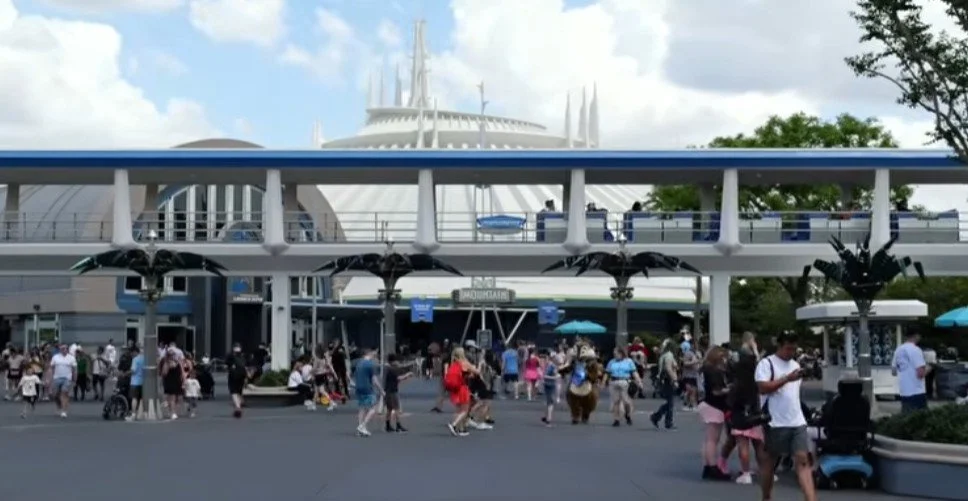
Googie Design: These "Power Palms" bridge the gap between 1964 optimism and modern sci-fi.
Sound-Washing: The Aural Architecture
One of the most "invisible" things the Imagineers learned at the Fair was how to use sound to create a "sensory bubble." In 1964, General Electric’s Progressland used integrated speakers to ensure that the music wasn't just playing, it was part of the building.
If you stand in the center of Tomorrowland today, notice how the "Tomorrowland Area Music" loop seems to come from the walls themselves. The architectural "fins" on the buildings aren't just for show; many of them are housing for a complex speaker array. This "sound-washing" technique ensures that you never hear the "Hoedown" from Frontierland or the whistles from Fantasyland, a trick perfected on the Fairgrounds of Flushing Meadows.
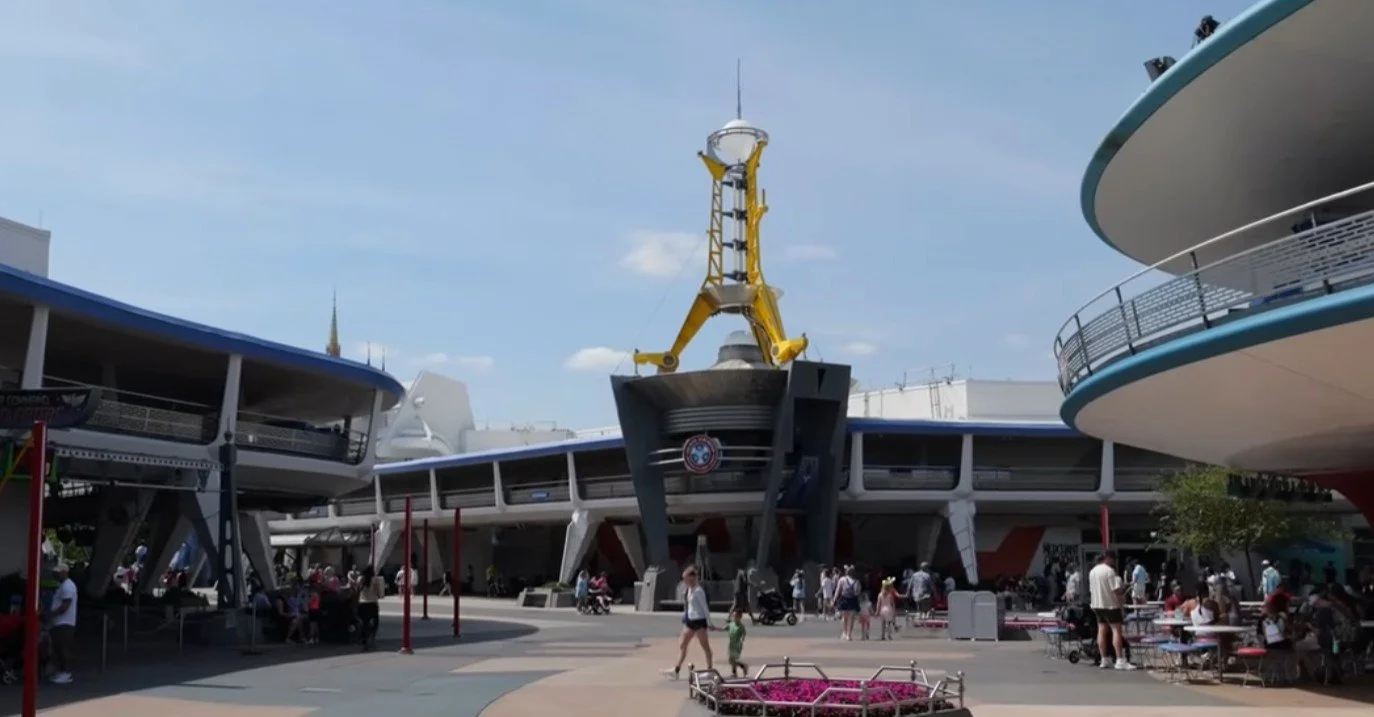
Hidden in the Walls: Imagineers use "Aural Architecture" to keep you immersed in the future.
The Nerd Verdict And Writers Tie-In
Next time you’re rushing toward Space Mountain or grabbing a Joffrey’s, take a second to look at the track, the trees, and the models. Walt Disney World isn't just a theme park; it’s a living museum of the greatest World’s Fair in history. The future might be constantly changing, but in Tomorrowland, the spirit of 1964 is still very much alive.
One final note. I was born in June of ‘65. My mom always told me the story about how they went to the World’s Fair and saw all of those exhibits in the Spring of ‘65 and I was along for the Ride. Very Cool!
What’s your favorite "hidden" detail in Tomorrowland? Let us know in the comments below over on the Disney Nerds Podcast Facebook Page.